Skip to content
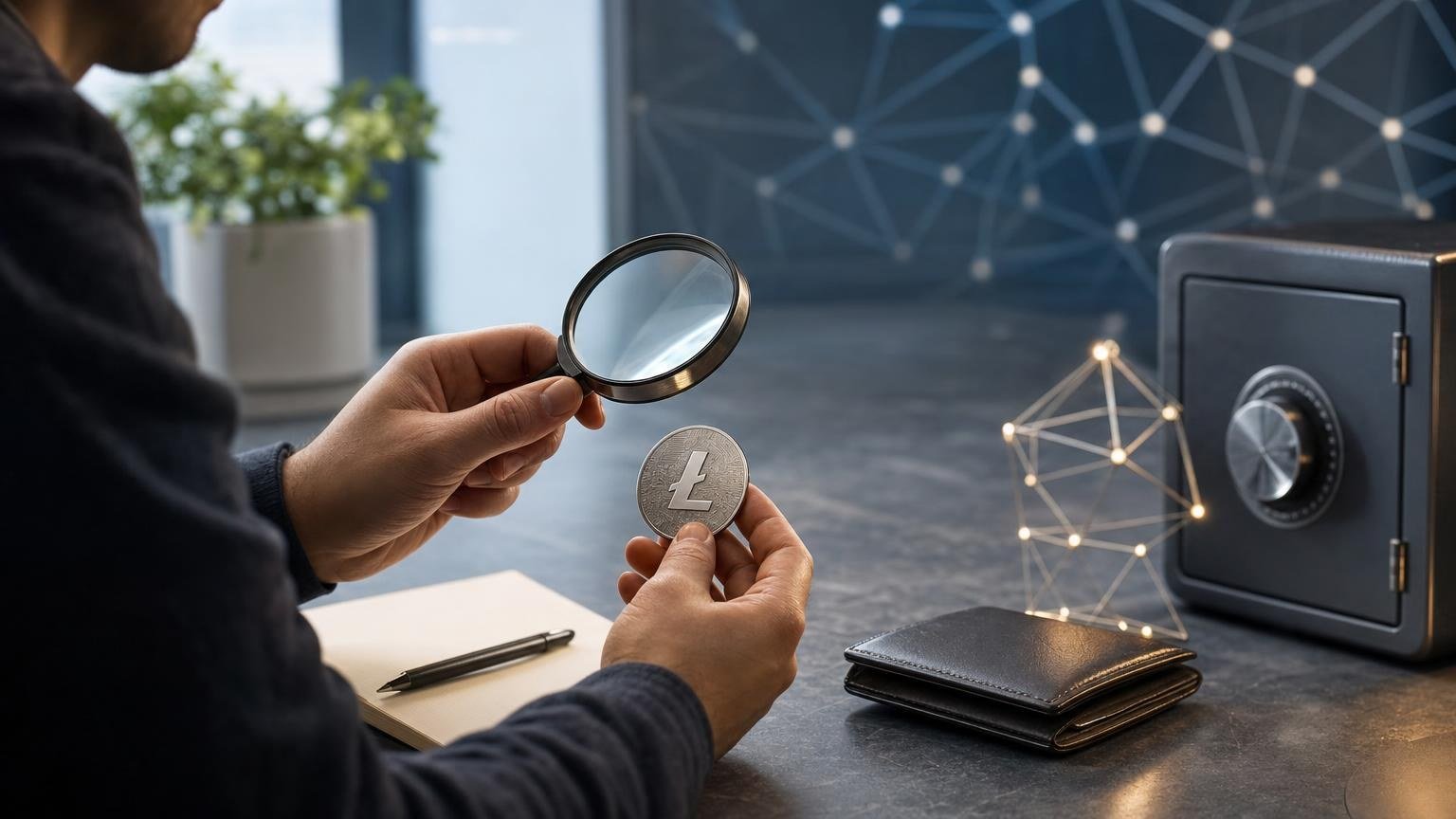
A Litecoin address can look plausible and still be wrong for the exchange route you intend to use. Before sending LTC, confirm the asset, network, address, amount, fee handling, and receiving requirements as one connected process. Stop whenever the displayed details differ; a valid-looking address alone does not prove that the recipient controls it or that the exchange supports its address type.
Operation State Map: From LTC Exchange Task to Confirmed Result
- Task: define the intended operation.
- Transition condition: You know whether you are sending LTC to an exchange deposit address or receiving LTC in your own wallet.
- Check: The order and wallet both identify the asset as Litecoin or LTC.
- Success sign: The asset, sending side, receiving side, and expected result are unambiguous.
- Stop if: The order requests another asset, the route has changed, or you cannot tell which party generates the destination address.
- Input data: obtain the destination from the receiving side.
- Transition condition: The receiving wallet or active exchange order displays a fresh LTC address.
- Check: Copy the address from the authenticated account or wallet screen rather than from an email, advertisement, search result, or unsolicited message.
- Success sign: The copied value matches the address still shown by the receiving side.
- Stop if: The address changes after copying, the page domain or application appears suspicious, or someone asks you to replace the generated address manually.
- Verification: match the network and address.
- Transition condition: Both sides explicitly support the same Litecoin transfer route and address type.
- Check: Compare the first and last characters, then compare the full address on both screens. If QR scanning is used, inspect the decoded text before approving it.
- Success sign: The complete destination is identical and the receiving platform accepts that Litecoin address format.
- Stop if: The wallet warns that the address is invalid, a different network is selected, or the receiving service does not confirm support for the displayed address type.
- Action: review amount, fee, and order requirements.
- Transition condition: The destination has passed the checks above and the exchange order remains active.
- Check: Confirm the LTC amount, whether the sending wallet adds or subtracts its network fee, and any currently displayed deposit requirements.
- Success sign: The expected amount will reach the destination under the order’s current terms.
- Stop if: The amount falls outside displayed order requirements, the fee changes the amount to be received, or compliance instructions are incomplete.
- Waiting: record and monitor the transaction.
- Transition condition: The wallet has broadcast the transaction and provides a transaction ID.
- Check: Verify that the transaction ID appears in a Litecoin block explorer and that its output includes the intended address and amount.
- Success sign: The transaction is visible and begins accumulating network confirmations.
- Stop and diagnose if: No transaction ID is produced, the explorer cannot find it after broadcast, or its destination differs from the approved address.
- Result: confirm completion or enter recovery.
- Transition condition: The receiving service has detected the deposit and its required confirmation or compliance process has finished.
- Check: Review the order status and credited asset rather than relying only on the sending wallet’s “sent” label.
- Success sign: The exchange order shows a completed result consistent with the original task.
- Recovery branch: If the blockchain confirms the correct output but the order remains pending, preserve the transaction ID and order details and contact the receiving service. Do not resend unless instructed through an authenticated support channel.
Choose Litecoin and the Correct Address Type
The sending wallet and receiving order must both show LTC on the Litecoin network. Do not choose a similarly named asset or assume that an address shown by another network is interchangeable. Current pair, network, and direction availability should be checked before creating an exchange order.
Common Litecoin mainnet address formats include legacy addresses beginning with L, script addresses commonly beginning with M, and SegWit addresses using ltc1. Litecoin also has MWEB addresses using ltc1mweb. These prefixes help identify a possible format, but they do not establish ownership or guarantee that a particular wallet or exchange supports it. The Litecoin documentation also notes continued compatibility with an older legacy P2SH prefix, which is another reason not to judge an address solely by its first character. [1]
MWEB requires particular care. Litecoin Core implements MWEB, but that does not mean every exchange deposit system accepts MWEB transfers. If the receiving instructions do not explicitly identify MWEB as supported, stop and obtain a standard Litecoin deposit address or clarification from the recipient. [2]
Validate the Address Without Trusting Its Appearance
Use copy and paste or scan the receiving side’s QR code, then compare the decoded address with the text displayed by the recipient. Malware can replace clipboard contents, so checking only the first few characters is insufficient. Compare at least the beginning and end, and preferably the complete address on a second screen before authorizing the transfer.
A compatible wallet normally checks the address encoding and checksum. Advanced users running Litecoin Core can also use its address-validation function. A successful syntax check means that the string is structurally valid for the client; it cannot prove that the address belongs to the intended recipient, remains assigned to the current order, or is accepted by the exchange route. Litecoin’s Bech32 implementation, for example, verifies the human-readable part, permitted character set, length, witness data, and checksum rules. [3]
Generate or copy the deposit address only after signing in through the known application or site. Avoid addresses delivered through direct messages, support impersonators, sponsored search pages, or emails that pressure you to act quickly. If the order page refreshes and produces a different address, treat the old and new values as separate until the service confirms which one is valid.
Check Memo or Tag Requirements, Amount, and Fee
A normal Litecoin transfer is routed to its blockchain address. Do not invent a Memo or Tag or copy one from an unrelated asset. If the receiving service displays an additional identifier for the specific order, reproduce it exactly in the field it names. A wallet’s optional “note” or “label” may be local metadata rather than information transmitted to the recipient, so verify the receiving instructions instead of assuming the fields are equivalent.
Before the irreversible approval, compare the exchange order amount with the wallet’s final transaction summary. Some interfaces display the network fee separately, while others can subtract it from the entered amount. The relevant success condition is that the amount expected by the order will actually be sent to the verified destination. Do not rely on an earlier quote or fee estimate if the confirmation screen now shows different figures.
This is also the point to review current compliance requirements. They may vary by operation direction and by the result of compliance checks. If the service requests information or pauses the order, clarify the applicable requirements before sending rather than attempting to bypass them.
The Final Stop Point Before Broadcast
- The asset is LTC, not another coin or token.
- The sender and receiver identify the route as Litecoin.
- The receiving platform supports the displayed address type, including MWEB only when explicitly stated.
- The full address matches the authenticated receiving screen.
- No unexpected Memo, Tag, network, or recipient detail has appeared.
- The final amount and fee treatment agree with the active order.
- The order has not expired, been cancelled, or changed its deposit details.
If every checkpoint matches, you can open the exchange form and verify the current LTC route. Recheck all generated order details before transferring funds. Cryptocurrency prices and exchange terms can change, and blockchain transactions may not be reversible after broadcast.
How to Track a Delayed or Incorrect Transaction
The wallet shows pending and there is no transaction ID
The wallet may not have broadcast the transaction. Check its connection and status without creating a duplicate payment. If it remains unclear, use the wallet provider’s authenticated support process. A screenshot saying “sent” is not a substitute for a transaction ID.
A transaction ID exists but the explorer cannot find it
Confirm that you copied the transaction ID rather than the destination address or an internal order number. Check it with a Litecoin explorer, not an explorer for another blockchain. If it remains absent, ask the sending wallet whether the transaction was successfully broadcast. Do not send again merely because the first transfer is not yet visible.
The transaction is visible but unconfirmed
Compare the destination and amount first. If they are correct, wait for the confirmation requirement stated by the receiving service. Litecoin Core transaction data distinguishes an unconfirmed transaction from one included in the active chain and reports a confirmation count after inclusion. The receiving platform may require its own number of confirmations before crediting an exchange. [4]
The blockchain confirms the correct address, but the exchange is pending
Preserve the transaction ID, order identifier, destination address, amount, and relevant timestamps. Submit them through the service’s official support channel. A blockchain confirmation proves inclusion in the chain; it does not prove that an exchange has completed its internal matching or compliance review. Avoid publishing account details or private wallet information in public messages.
The destination or network was wrong
Stop making further transfers. Contact the operator that controls the destination, if identifiable, and provide accurate transaction information. Recovery may be technically impossible or may depend on the recipient’s systems and policies. Never share a seed phrase or private key with anyone offering recovery, and do not accept a promise that funds are guaranteed to be returned.
What Counts as a Verified Finish
The route is complete only when the Litecoin transaction is recorded under the expected transaction ID, the destination and amount match the approved order, and the receiving service marks the requested exchange result as completed. Remaining uncertainties may include additional confirmation requirements, compliance review, support response time, or whether an unsupported address type can be recovered. Keep the order record and transaction ID until the credited result has been checked.